I am very pleased to share that Mucosa is part of the Mid Wales Arts 2022 Climate Change Exhibition in Caersws. Available to view – 5th June to 7th August 2022
Dottie-may uses oil paint without turpentine or any alternative thinner. She stopped using toxic liquids after discovering the detrimental effects they have on the body and environment. By stopping the use of toxic materials, she developed her techniques for a more organic handling of the oil paint.
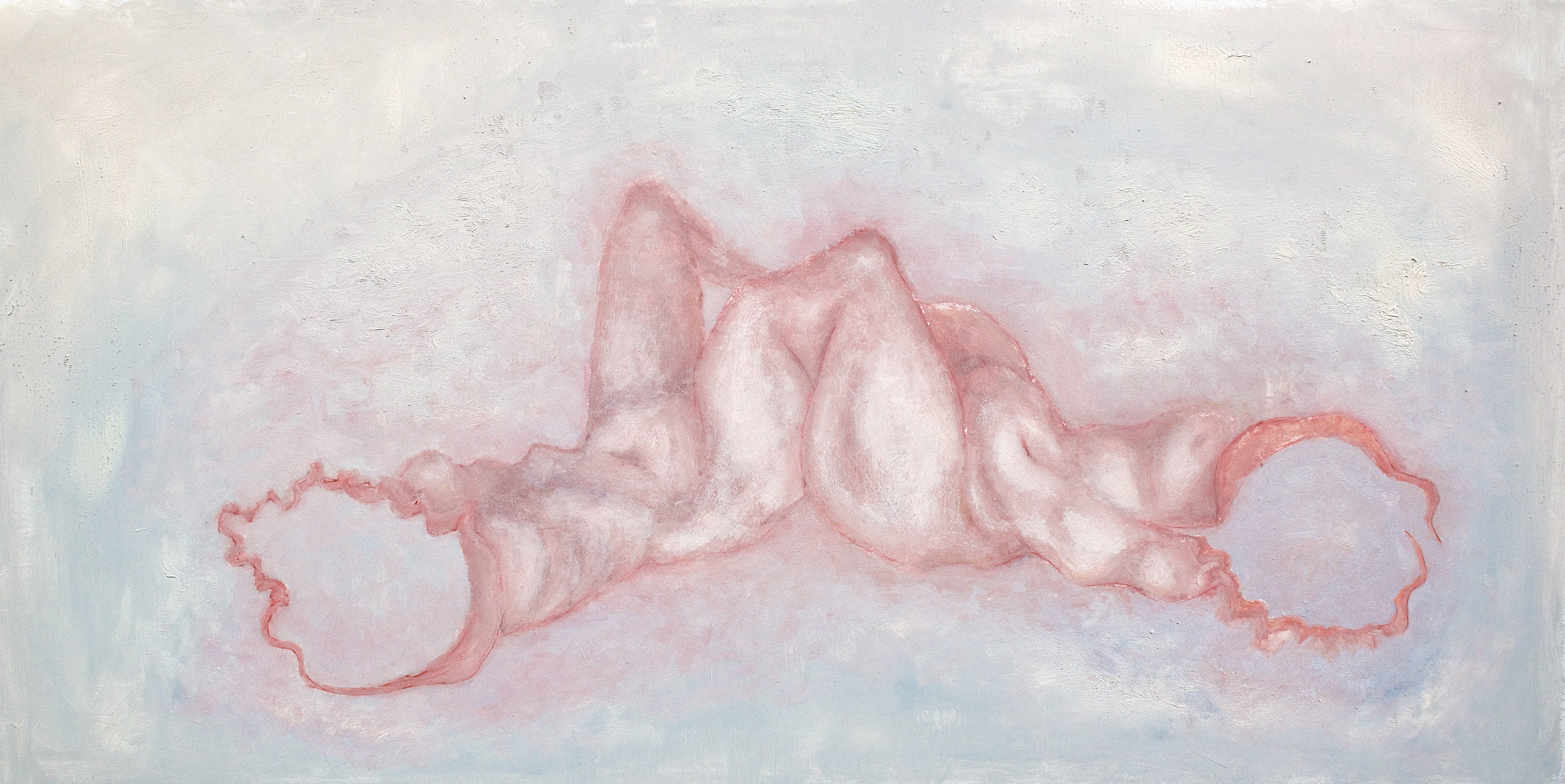
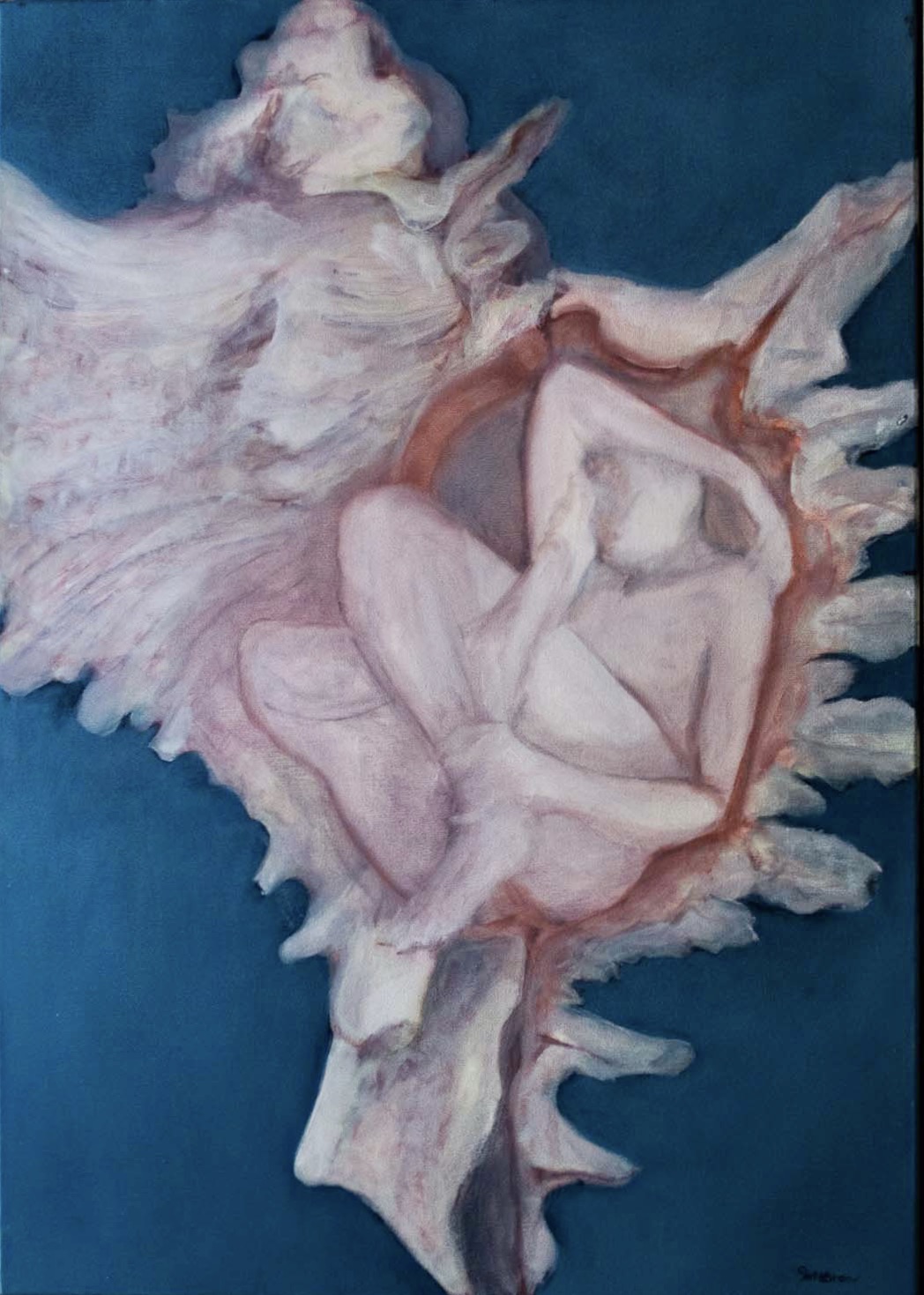
Mucosa is symbolic of the fragility found in nature. Too often the beauty of nature is taken for granted, cast aside, and thoughtlessly consumed. Molluscs often occur as a motif in Dottie-may Aston’s work – in Mucosa we see a nymph weeping over the carcass of a shell. By compositionally inverting this nature deity, the focus is drawn to what remains of the small sea-creature’s home, which is a metaphor for our own fragile habitat.

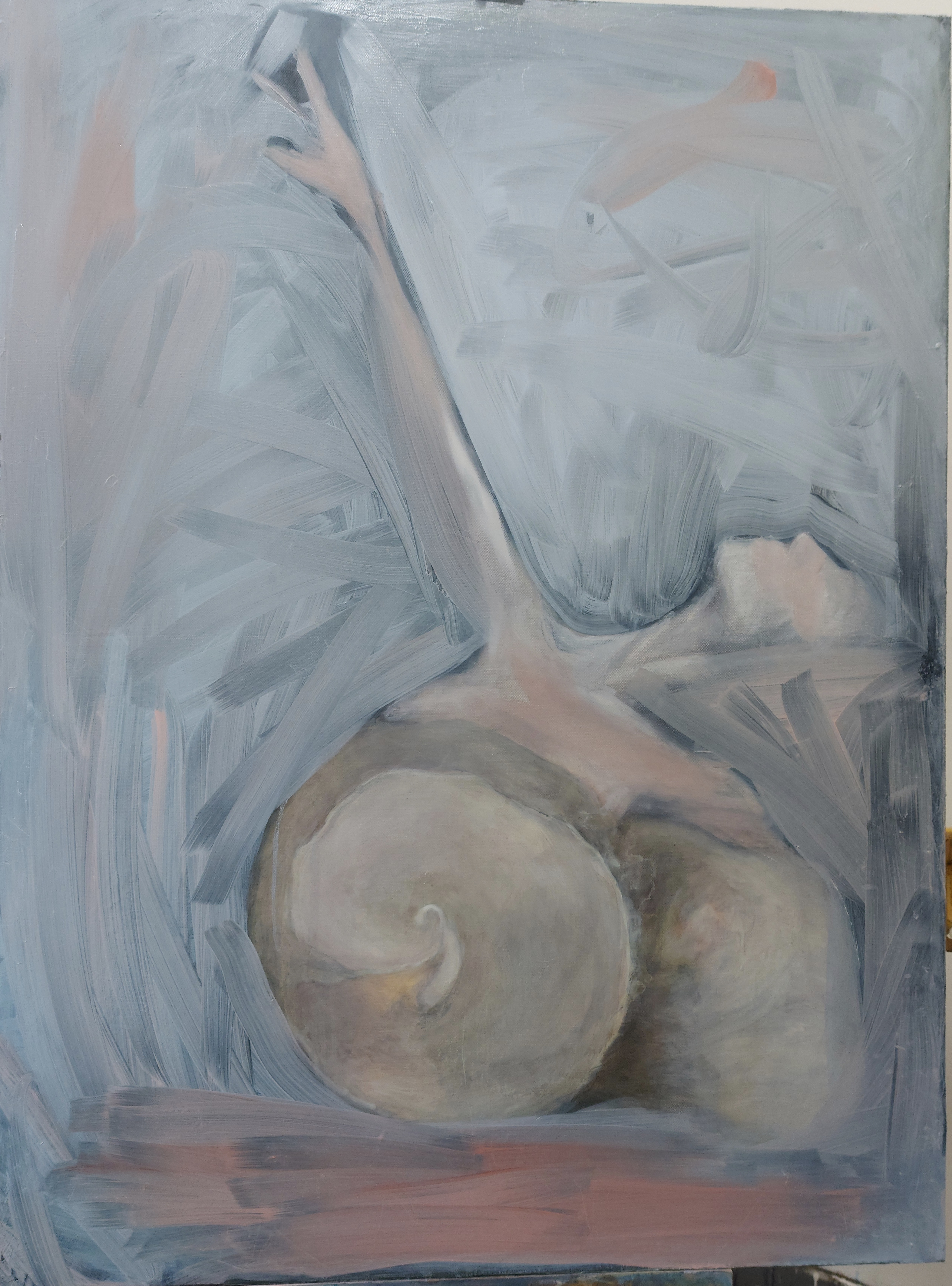
In recent months I have been working on a large painting, Ovum Nymphs, which proved to be a challenge. It had been hung a prominent spot in my studio where it was easily viewed but ultimately was over contemplated. Yesterday I realised that its presence had started to sicken me, so I placed it in storage with the hope that it will give me the head space that I need to focus on my other pieces.
180 x 90cm, oil on canvas.
The studio feels refreshed without the painting’s door-sized presence. My struggles with this canvas were partly due to not being comfortable working on this large scale. The sheer amount of paint used makes it discouraging to rework once applied — the background alone is made up of two large tubes of white. After using up all that paint before thinking that maybe it would be better a different shade, my relationship with this painting soured. Giving myself distance from this painting will allow me time to lay aside any negative feelings I have for it. In due course I will be able to rework this painting with a fresh mind. Although I do not dislike this painting in its current state, I have not brought it to a satisfactory conclusion and, I am unable to understand how I can improve it at the moment.
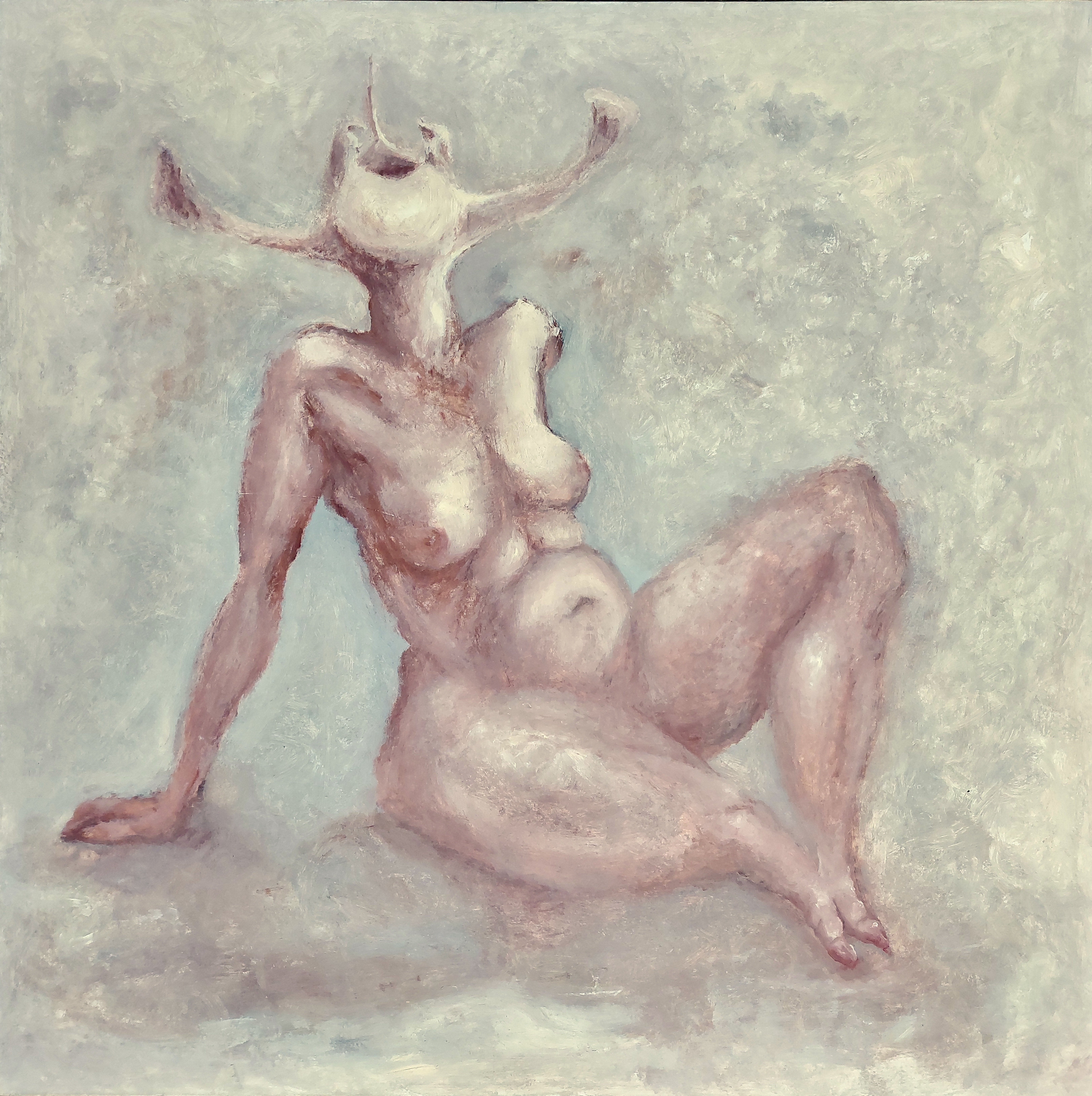
I am happy to share that The Banquet has been accepted into the Vacant Museum‘s virtual exhibition, Cravings.
oil on canvas, 100 x 100 cm.
Curb your cravings! Feast your eyes on the delectable female figure laid out for your sole enjoyment. On-the-bone sumptuously plump idea of emaciated perfection. Starve yourself no more!
That was my response to the exhibition brief What do we want, now? What fuels the viscous cycle of wanting and wasting that defines our modern world?
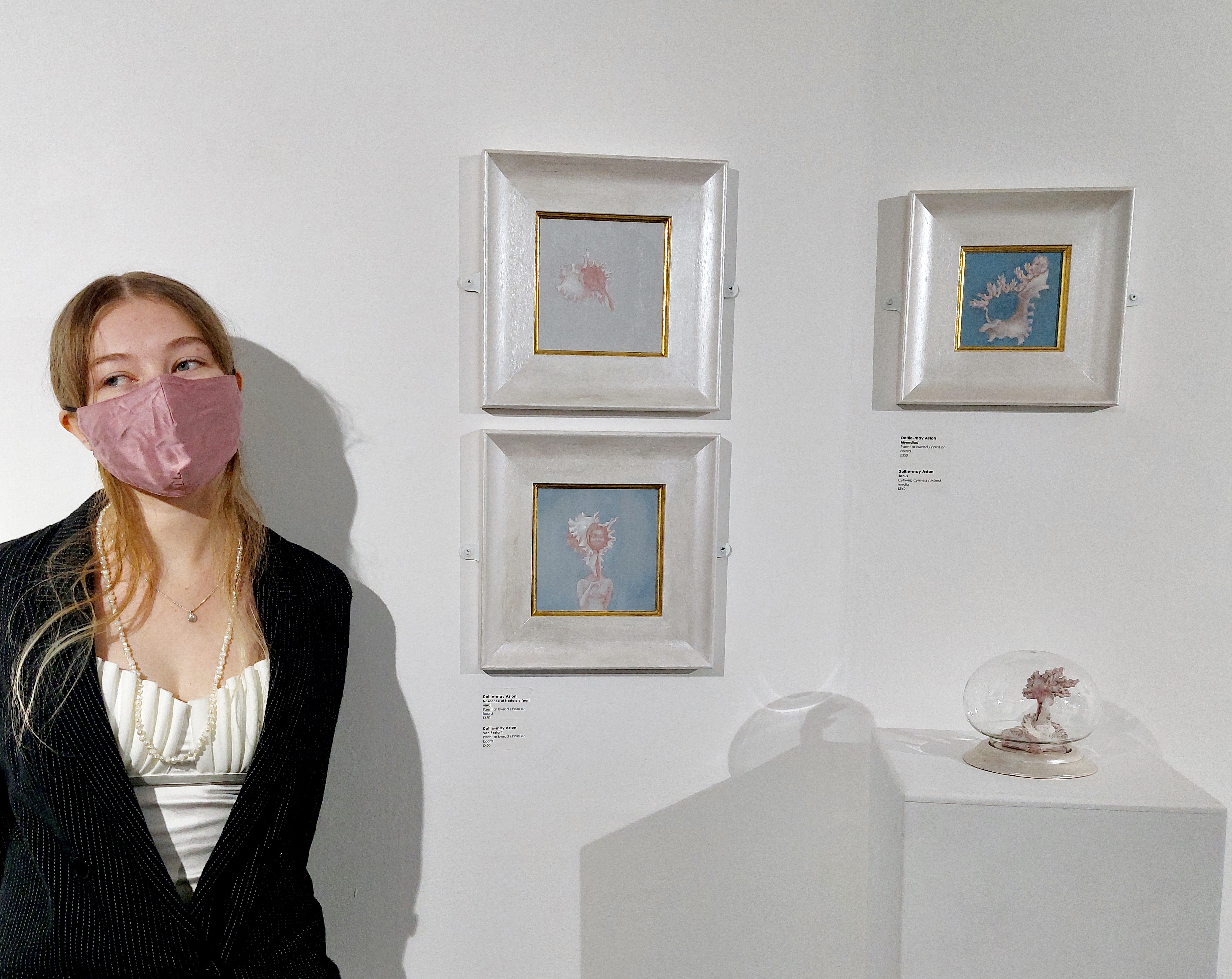
A closer look at the works accepted into the Agored 2021 exhibition by Galeri Caernarfon.
(04.12.21 – 15.01.22)
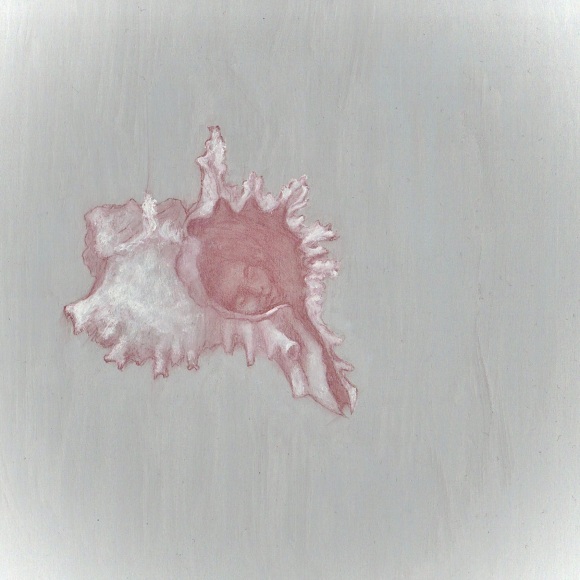
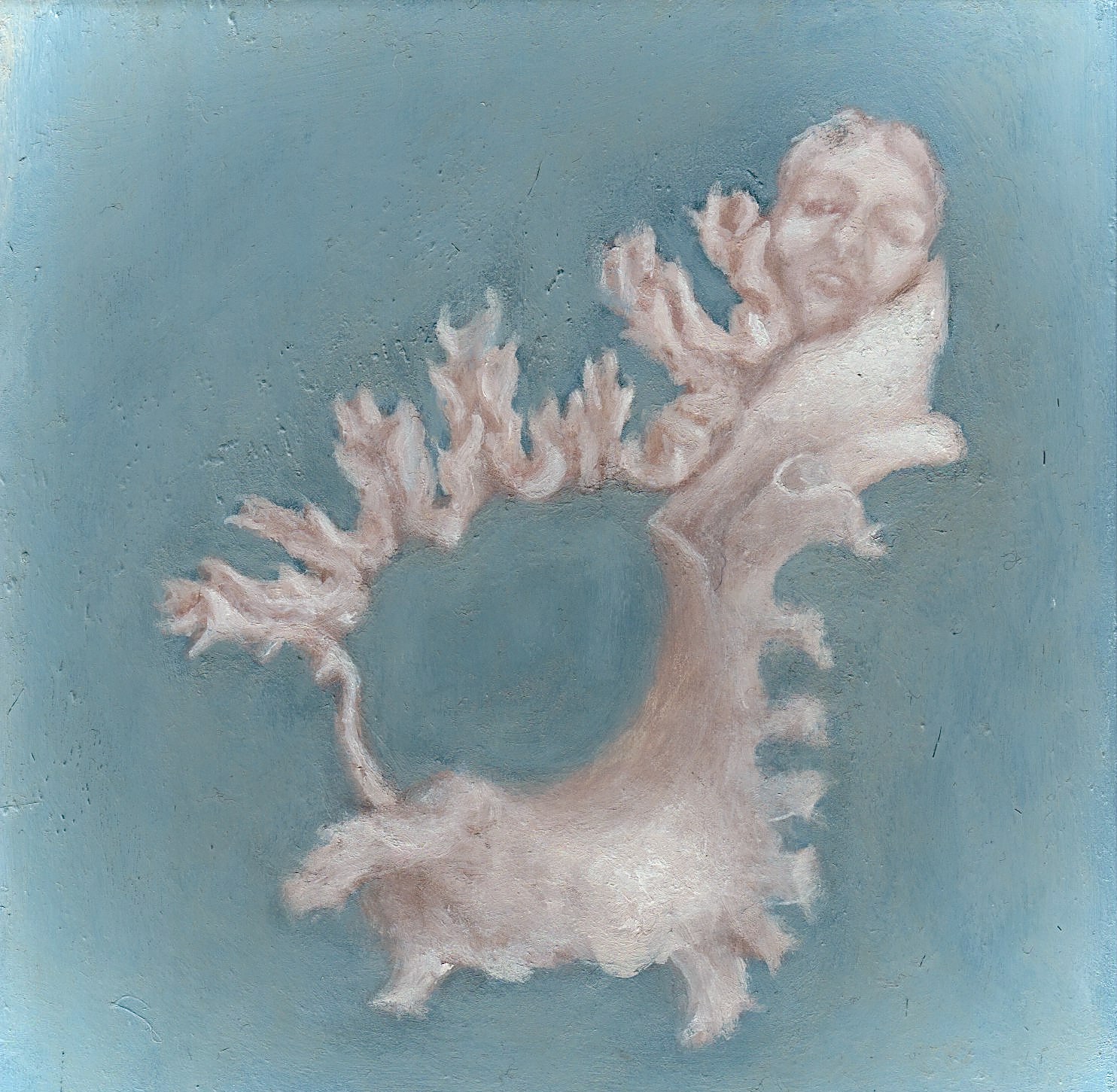
Mynediad, Von Restorff, and Nascene of Nostalgia.
All are oil paintings on aluminium panel
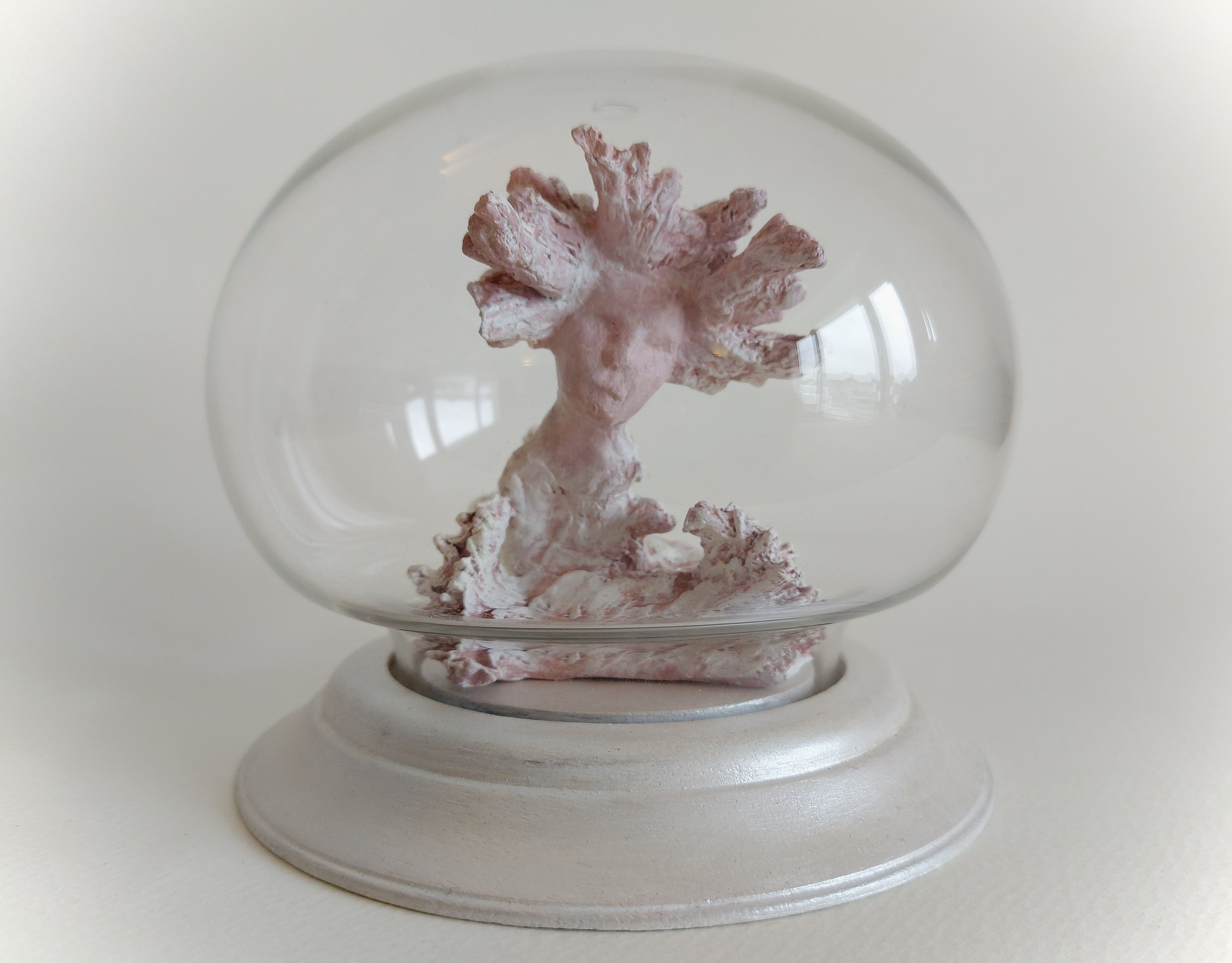
Janus
Air-drying clay
I am very grateful to of have this opportunity. Below is my artist statement for the show.
Dottie-may Aston is a painter and sculptor based in Anglesey. She has an idiosyncratic fascination with objects. Interested in how we impose sentiment onto otherwise everyday items, she created delicate personalities within the light-hearted motif of seashells. The paintings and sculptures convey how a memory can become the object itself.
In this journal update, the conceptual side of my degree paintings Nascence of Nostalgia will be discussed.
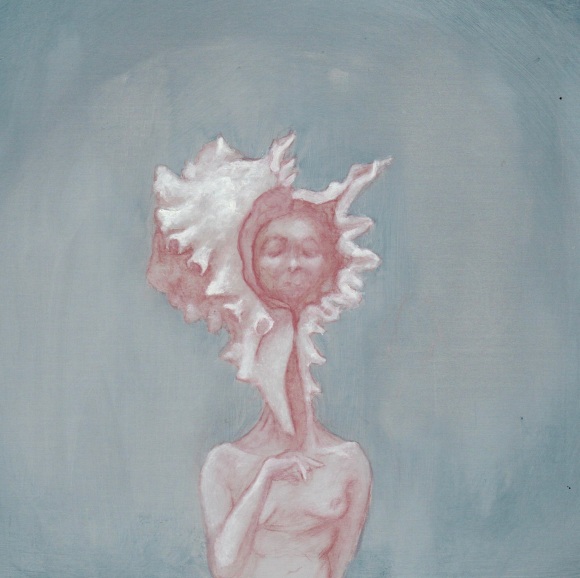
My degree-show paintings, Nascence of Nostalgia, are depictions of the birth of memory associated with an object. The human form is the representation of memory, how through a slow labour it develops within objects, to the extent that, when viewing an item, all that is seen is a memory. The use of objects with figures shows the necessity that mankind imbues objects with memories and emotions. Shells represent wombs that birth a nostalgia imitating the form of a humanoid that will eventually surpass the shell. The beginning piece of the series shows a glimmer of what is to grow from the shell. The last painting in the suite depicts the fully developed memory.
The anthropological element of Nascence of Nostalgia is integral to the concept. The anatomy is not intended to be exact. It is a suggestion of the human form painted from imagination, as is the shell. Representing memory in human form, these paintings silently convey the emotional attachment humans hold to objects. Memory is held within the viewer. It is not for me to strictly dictate what should or should not be understood by these paintings. This way, the viewer can make their interpretations, picturing an object of their own that holds memory.
While Nascence of Nostalgia depicts the birth of a memory, Moribund of Memoryis symbolic of sentimental decay.
The use of a sea creatures’ home for my inspiration has been a slow engulfment. Although using this inspiration for a time, it is recently that I realised my paintings are imitations of shells. This muse first found its way into my work with theMollusca Femella series. Moving on to using a smaller scale I started to paint the surreal depiction of a shell thinking more of the attachments to objects rather than the material. Working on this smaller scale achieves a more intimate experience that exemplifies the feeling behind an object rather than the visual quality.
Painting in lockdown made me look at innominate items, such as shells that are often acquired in admiration for beauty, but once collected they often become ignored. I am interested in why we find attachments in objects that do not necessarily have a high monetary value. We pick up a little slimy sea creature skeleton as ornamentation from our memory of the beach. Because they retain such sentimental value to us, they hold this meaning when they are involved in important events in our lives. How valuable possessions are often only so, because of their provenance. This interest brought me to paint a surreal depiction the birth of a memory. Attached in this post is some of the paintings that brought me to muse upon the retain of sentiment.
I have realised most of my artistic skills have been learned through trial and error. For example, while painting the Molllusca Femella I faced a skirmish with the background tone due to my lack of confidence with light colours – as I mentioned in the articleThorn in my Background.After painting the subjects, I darkened the backgrounds using blue. Subsequently the subtle colours were overpowered, and the focus of the painting became unclear. After many frustrated applications of paint such as experimenting with gold, red and yellow I ended up painting the background blue again. A long period passed until the realisation that the background does not have to be a dark colour hit me. The reason the painting did not feel right was because I painted the subject on a canvas primed with white Gesso. Slowly, I started to make the blue lighter. It is only recently after submitting them to be marked that I have the courage to whitewash the backgrounds. When myself and my partner Jonathan, were enjoying a panad in our living and studio room, I became side-tracked from our conversation when viewing the Molllusca Femella series. The feeling to paint them overwhelmed me “Am I allowed to work into those paintings?” I mused aloud. “Only if you let me paint with you” replied Jonathan.
Below is the video of us painting the backgrounds white.
The knowledge taken from this experience has been a valuable one. I have taught myself to paint the background before the subject to ensure that the painting is tonally harmonised. I have also realised the obvious, each painting has a different growing time. While some are done in one sitting, others like these, feel as if they will never be finished.
The way in which my artistic interest began is unclear. I was born into an artistic family which meant I subconsciously took inspiration from the original paintings and prints that decorated our house. My first memory of scrutinising over an artwork was with a reproduction of The Kiss by Gustav Klimt. When looking at its gold shapes, I realised there was a face of a woman. With astonishment I asked my mum if it was a face. After confirming my discovery she pointed out the male figure. I then realised, through child’s eyes, that they were hugging. The thought of kissing did not cross my mind.
Flaming June by Frederic Leighton.
Another painting that holds emotional nostalgia is Flaming June by Frederic Leighton, a print was hung in my grandmother’s house. Similar to The Kiss, I would have only been around four when I first saw it. I viewed the painting from a very different angle than would have been originally intended by the artist. I remember the foot hidden within the vibrant blanket. The narrow hallway in which the print hung mean that it took a number of visits, with me staring at it intermittently, to discover the full figure. I haven’t viewed this painting much since my childhood. When I recently rediscovered it, I was taken aback by the proportions – as of course they were very different to my childhood memory.
While painting the Mollusca Femella series I struggled with the backgrounds – due to my lack of confidence with light colours ‘light’ within context to my past work.
After I had painted the subjects, using a very deep blue, I darkened the background. Subsequently the subtle colours of the figure disappeared. The focus of the painting became unclear. Thinking that if the figure was darker it would balance the painting, I exaggerated the shadows, only to immediately regret doing so and undid it. A few days later it struck me that it might not be the figure but the background that is the wrong tone or colour. Unsure of how I could rectify this I commenced a sequence of background painting, first warming it up, not liking that, I added the shadow of the subject by darkening areas around the shell. Unsure if this was working for the painting, I then left the studio to go home so that I may see it with fresh eyes the following day.
My background obsession went on for weeks, too warm, too cool. I even painted it gold at one point. I don’t think it occurred to me that neither the background nor the figure had to be dark. I forgot to look at the painting with fresh eyes and was holding on to what worked for previous paintings. After finally realising this it gave me the confidence to lighten it, using the same blue of the first lawyer with white and a dash of yellow. The lightening of the background was a very gradual process, but it slowly, surely started to fit the figure until we have the blue you seem now. From this experience I realised how timid I have become with the paint, I learned to not be afraid of it and treat the paint as if it were my friend.
~
Bellow I have added some pictures comparing the dark background to the light. Which do you prefer?
^ Mollusca Femella I ^
~
^ Mollusca Femella III – Beginning > to > finish ^
One of my painting mentors claimed that for each student they can picture a painting – for me it was a portrait of a bat. This painting was done for a workshop that took place during the first national lockdown. A class with the objective to upscale a small object. Due to the covid-19 restrictions I, along with the rest of my class, had to work from home. So I was left find my own muse, which was a little dried-out bat.
How did I acquire this little creature you ask? Well, the bat managed to lock himself into a greenhouse and was unfortunately found completely dehydrated, perfectly preserved. Although there was a strict rule against pets in my accommodation, the bat accompanied me to University, I am glad he did. At this time of solitude locked within the four walls of my apartment I sympathetically felt drawn to paint this creature.
Despite the fact that as I painted, tears had escaped my eyes. I still enjoyed depicting this little being so much larger than he is in real life. It did not occur to me at the time, but this painting was a milestone in my work. This being one of my first paintings of an ‘object’ that was treated as more than a still life, I thought of it as a portrait. This painting pathed the way for me to paint the Mollusca Femella series which features upscaled shells.






 Dottie-may Aston