Categories
Art History Uncategorized

Disasters and Truth

This is an essay in response to the question: Discuss four etchings from Goya’s series the Disasters of War, describing what is known of the artist’s experience of the Napoleonic invasion of Spain, and considering Robert Hughes’ suggestion that his prints were ‘lies in the service of Truth.

~

Born in the Spanish provincial town of Fuendetodos in 1746, Francisco de Goya y Lucientes worked his way up through the Spanish Royal Court. As First Court Painter his paintings emulated a very personal approach to royal painting commissions. Though shifting political powers that resulted in war, Goya managed to stay in favour throughout his career, enjoying the benefits of the royal commission. Protected by four different monarchs he was able to stay politically neutral. While still in this role, he documented and commented on the effects the Napoleonic War had on the Spanish citizens. Goya’s paintings on the subject of war draw attention to how war was experienced by the common people, and how they took matters into their own hands. The series of etchings titled The Disasters of War capture personal and shocking moments throughout a turbulent time in Spain. With masterful use of strong chiaroscuro, and direct mark-making, Goya illustrates the unspeakable. Although graphic, there is a separation from reality in which the viewer is welcomed to muse upon.

Through the following intaglios, They Don’t Like To, Neither do TheseI Saw It, and What Courage! as visual evidence. With reference to art critic Roberts Hughes’ statement of the etchings being illusions in the service of truth. Alongside the comparison of artist Otto Dix, who printed a striking series on the subject of war a century after Goya’s death. The historic legitimacy of The Disasters of War will be discussed.

~

Arriving in the royal court of Madrid in 1775, was the twenty-nine-year-old, Goya (Bouvier). Although he was first appointed as a tapestry designer, Goya, in 1789, became the head court painter to the newly crowned Charles IV (Tomlinson 24). The first Spaniard to hold this position since Diego Velázquez, the lead painter in the court of King Philip IV (Kozak). It is probable that Goya found inspiration from studying the work of the previous master, which is apparent from the compositional reference Goya makes to The Ladies-in-waiting (fig.1) in his royal portrait titled The Family of Carlos IV (fig.2). The idea of artist as spectator features strongly in Goya’s later artwork and especially present in the print series The Disasters of War. This concept may have been influenced by Velázquez’s daring decision to include his own portrait in his royal commission. Goya’s role as spectator and observer may have been enhanced by him becoming bilaterally deaf after suffering what is believed to be a series of strokes in 1793 (Sooke). It is possible that deafness is part of the reason Goya was admired by various patrons. Without hearing it would have been difficult to remain in tune with the gossip of court – it would therefore aid him in remaining neutral. In this way, throughout volatile political times, Goya managed to stay in favour with royalty. The ability to adapt to situations can be seen from Goya continuing to portray the brother of French emperor Napoleon Bonaparte, Joseph I, who ruled Spain for a short period until the Bourbon restoration. Although this adaption to the occupation was regarded as suspicious, Goya was cleared of his involvement with the French (Schjeldahl).

Throughout his life Goya kept his intentions, and political interests unknown, what he does not explain through the written word he goes into great detail visually. The Second of May (fig.3) painted in 1808, depicts the Dos de Mayo Uprising, also known as the Battle of Madrid. The beginning of the Spanish revolt, Goya shows us though mixed pigments of paint the disorder that took place that day. Citizens of Madrid are portrayed with the crudest of weapons, attacking the trained Napoleonic army. A chaos that stemmed from Napoleon’s meddling with the royal politics of Spain, by replacing the monarch for his brother, Joseph (Gilbert). The Napoleonic army marched on Madrid to remove the children of the royal family to France. These actions instigated dismay amongst Spanish citizens that, on this day climaxed. Marking the beginning of the bloody conflict with Spain entering the Peninsular War, an involvement would last until 1814 (Gallery). Goya’s depiction of The Second of May shows a vague focal point, emphasising the chaos of the event. Centrally placed, a French soldier is dragged from his horse to be brutally murdered. Adding to the mayhem, a man is seen pointlessly stabbing the soldiers’ horse, suggesting how ruthless the situation became. 

~

Through the monochromatic imagery of The Disasters of War, Goya depicts the horrors of war and the effects it has on the innocent, rather than proud conquests commissioned as history paintings. The series consists of eighty etchings that were printed by the Royal Academy of San Fernando in 1863 – thirty-five years after Goya’s death (Tomlinson 25). If not kept surreptitious during Goya’s lifetime the probability of The Disasters of War being destroyed as anti-war propaganda is possible. 

Although not following strict order, The Disasters of War is structured with themes that sequence in a random fashion (Matilla). The disarray of these topics may have been Goya’s way to convey a sense of the unpredictable nature of war. A theme that Goya devoted to early prints of the series, is the depiction of innocent citizens being victimised by soldiers. In particular, women are depicted as objects of sexual violence. Two titles that follow this subject are, They Don´t Like To (fig.4), and Neither do These (fig.5). Goya typically etches few and delicate lines for his female figures, in comparison to the intensely imprinted soldiers and backgrounds. He makes use of this visual device in Neither do These with contrasting lines that emphasises the woman and infants’ position in the print. The delicacy of Goya’s marks in these etchings demonstrates understanding of the female form. Gentle rendering and high tonal value of these women bring them into focus against their shadowy oppressors. 

Placed in the background, ecclesiastical architecture witnesses mothers being ripped away from their children by soldiers. The placement of this religious structure leaves one to wonder how Neither do These, although printed after the Napoleonic War, was accepted and not censored to the public eye. When, a century later, one intaglio by German artistOtto Dix was deemed too graphic and it was concealed. Drawn around 1916, plates made in the 1920s, editions 1924, The War, inspired by The Disasters of War, expressed Dix’s experience as a soldier in The Great War (Tate). The War is commonly believed to have fifty prints, when in reality there is fifty-one. This veiled etching Soldier and Nun (fig.6) portrays sexual assault in a religious setting, not unlike Neither do These. Advised before the public viewing of Dix’s collection that, if he were to include Soldier and Nun, the whole collection may be confiscated – due to its disgraceful message about their compatriots. (Crockett 185) The censorship of Soldier and Nun is possibly due to Dix depicting the wrongs of fellow Germans opposed to Goya, who depicts the French raping the Spanish. Afterall it was a Spanish art institute that printed The Disasters of War and not French. Neither do These is not Goya’s only print that ridicules religious beliefs, another title that follows is I Saw It (fig.7).

~

Robert Hughes’ book Goya uses examples of print titles to enforce his point that some of what Goya depicts are not what he witnessed (Hughes 272). Yo lo vi or I saw it would strongly suggest that Goya had in fact seen this specific scene. Although satirical, it is not impossible that a scene of this drama might have been observed by the artist. Hughes’ statement of illusion conveys a sceptical view on the legitimacy of these illustrative prints. The prints may be invalidated by the suggestion that the artist had not directly experienced these events. Afterall, had the artist witnessed every act of war, and depicted them exactly how he saw them, the images would intrinsically remain two-dimensional illusions of an event. One could also argue that any representational image is deceptive in their very nature, regardless of the truth behind them. Yo lo vi could also be translated to I Saw Her, which might suggest that Goya met the woman featured carrying a child in her arms. Had Goya interviewed the woman in question, she may have narrated her story of how, when struggling to bring her children to safety, little help was presented. Instead, a greedy clergyman hurries out of the scene clutching his most prized possession – the church funds. 

Hughes also questions whether Goya did actually witness the events depicted in I saw it, disparagingly remarking on its satirical nature. The service of truth that Hughes writes is a vague and provocative statement intended to disarm these reverent images. The statement could be used to describe most figurative paintings, the truth lays within the mind of the viewer and is not demonstrable from merely looking. 

The validity of Goya’s prints does not rely solely on him being present in those exact moments. Accounts of his visit to the recently besieged Zaragoza with Spanish General José de Palafox confirms his first-hand experience of the effects of war (Chute 58). This possibly lengthy visit to the devastated city left a lasting impression, that two years later contributed to the conception of The Disasters of War. This venture may have been more of a personal journey than political one, as Goya was born just outside of Zaragoza in 1746 (Wilson-Bareau 9). Palafox’s intentions of bringing the artist to document the war would have likely involved interviewing citizens, in order to bring to life their experiences to a wider audience. Contradictory to other prints in The Disasters of War, What courage! (fig.8) portrays a rarely seen positive side of Goya. Something that is additionally unusual is the depiction of a heroic action from warfare. Taking control of the now abandoned cannon, the figure of a woman known as Agustina Zaragoza stands upon fallen artillerymenas she fires at the invading French army (Wilkie 14). This is an iconic moment for Spanish history and has been the muse of numerous cultural arts, both written and visual (Shubert). This experience is obviously one that Goya has not witnessed himself, although he may have been shown the location and met Agustina during his visit to Zaragoza.

There is evidence that Goya studied casualties of the war, living in this time of chaos it is not surprising that the artist would make use of his available resources (Goldfarb 37-38). He orchestrates The Disasters of War with the use of corpses and memorising the figures, landscape and buildings. It is conceivable that Goya was acting much like that of a modern-day war correspondent or journalist. There lays a perceptive simplicity in each of these prints which alleviates the fear of misinterpretation. Hughes’ assertion about the illusive quality of The Disasters of War, based on the premise that Goya was not there, suggests an element of falsehood in the images. Visually Goya leads us to believe that we are looking at eyewitness accounts, by portraying the images from a relatively low viewpoint. This provides the prints with an intimacy as though the viewer participated in whatever savagery illustrated. Being an artist to the court for the duration of the Napoleonic War, might conclude the authenticity of war reports that Goya depicted (Harris-Frankfort). The legitimacy would be questionable if these depictions originated from a provincial, who could not have experienced such a variety of war scenes. With the position of Goya’s career, the possibility of him obtaining accurate descriptions of the war is probable. The prints of The Disasters of War are the visual equivalent to the historical writings that are referenced as the truth.

~

From tapestry designer, to First Court Painter, through turbulent political times Goya served four different kings. A portfolio that gradually shifted from flattering portrait commissions, to expressing a personal view on the tragedies of the Peninsula war between France and Spain.

Hughes suggestion that Goya’s prints are illusions in the service of truth, relating to the hypothesis that the artist was not there to witness every event, leaves one to consider the concept of truth itself. The idea of artist as spectator is further explored in the works of Otto Dix who, after experiencing the horrors of WWI, set about expressing his experiences through the same media as Goya. The fact that The Disasters of War were editioned long after Goya’s death may have meant that censorship, as in the instance of Dix, was avoided. 

Dix depicted The War from a first-hand perspective while Goya is seeing things from a distance that gives a broader understanding of what is going on. Form his place in the Royal Court, Goya observed the affect the war had on all members of society. Hughes’ judgment on Goya’s absent personal experience of conflict does not discredit these prints, arguably proving them to be more credible than that of an eyewitness.

The subjectivity of truth when considered in relation to religious ideals and understanding is made apparent through Goya’s series. The key placement of religious figures and architecture might reference the nature of blind religious belief having little physical bearing on the realities of war. That is not to say that either a religious or secular view is wrong or right. There is a balance of personal truths in reality, and that is possibly what Goya is playing with in this series. Goya’s depictions are as near to the truth as a journalist written word, the only alteration is the instruments used. To interrogate the truths of The Disasters of War is not dissimilar to question the written word of history. 

~

Illustrations
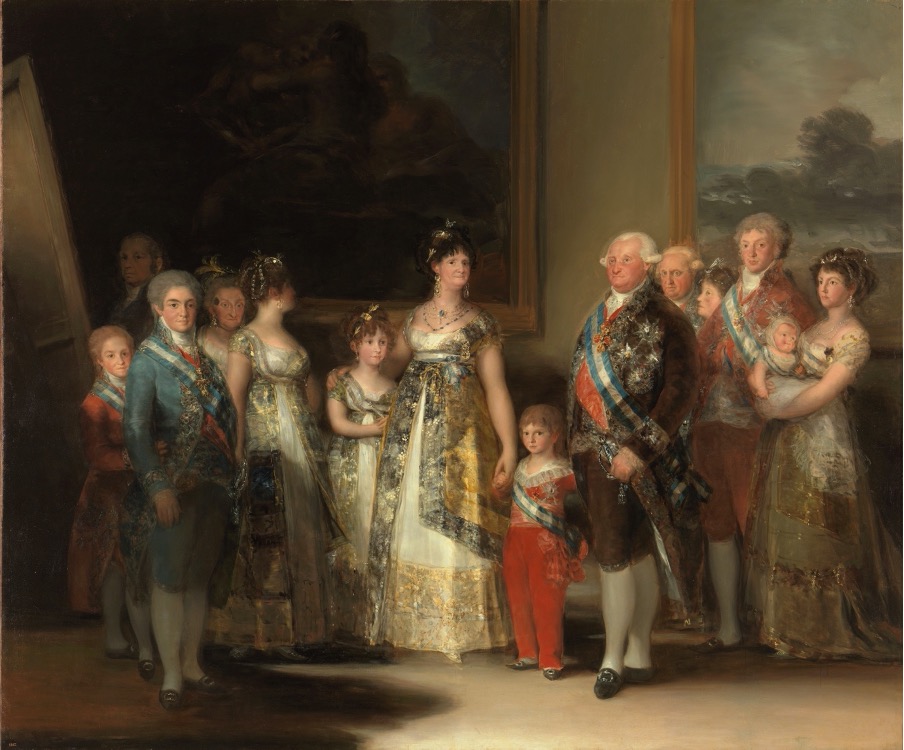
fig.1 Goya, Francisco. The Family of Carlos IV. 1800, oil on canvas. 280 x 336 cm. Museo del Prado, Madrid.

fig.2 VelázquezDiego. Las Meninas. 1658, oil on canvas. 320.5 x 281.5 cm. Museo del Prado, Madrid.
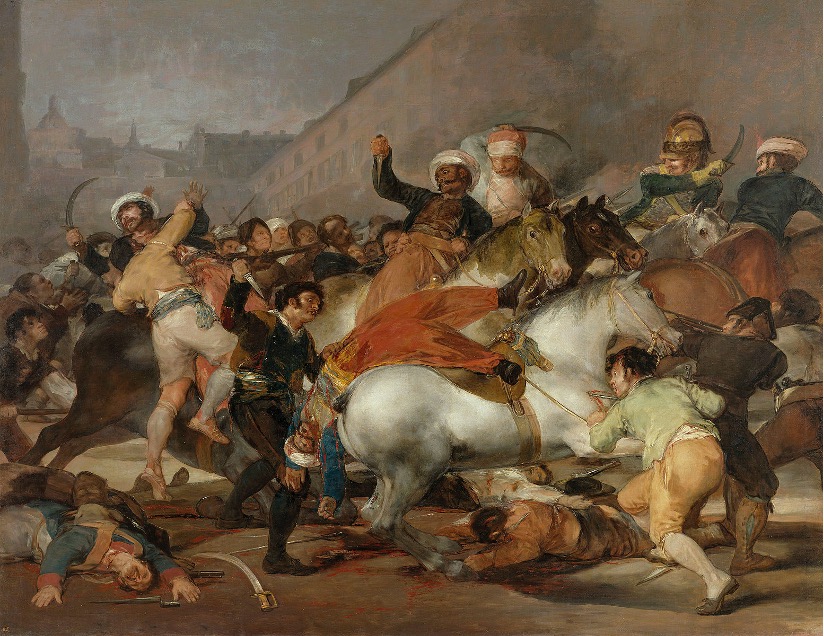
fig.3 Goya, Francisco. The Second of May. 1814, oil on canvas. 266 cm × 345 cm. Museo del Prado, Madrid.

 fig.4 Goya, Francisco. They Don’t Like To. 15 × 20.8 cm, sheet 25.2 × 34.2 cm. Etching, Drypoint. The Metropolitan Museum of Art, New York.
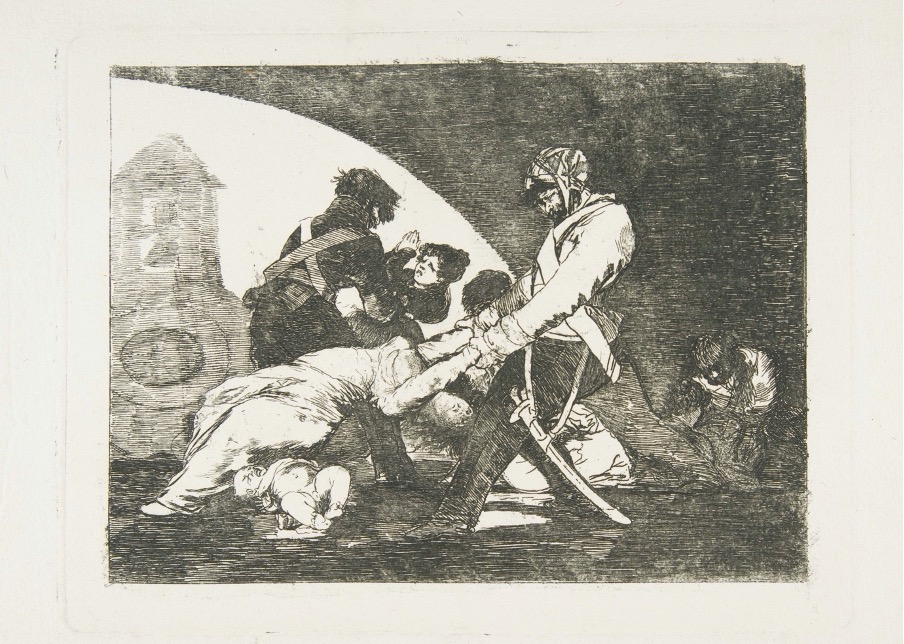
fig.5 Goya, Francisco. Neither do These, 1814, Etching, Drypoint. The Metropolitan Museum of Art, New York.

fig.6 Dix, Otto. Soldier and Nun. 1924, etching, aquatint, drypoint on paper. 19.5 x 13.5 cm. Art Institute Chicago.
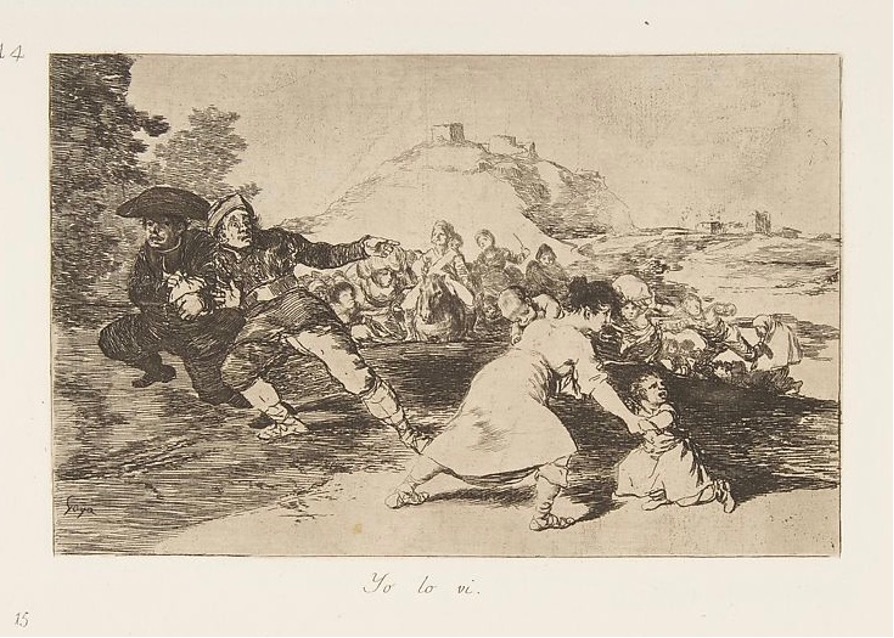
fig.7 Goya, Francisco. I saw it1810, Etching, Drypoint, 15.3 x 20.8 cm. The Metropolitan Museum of Art, New York.

fig.8 Goya, Francisco. Que Valor!c1815, Etching, Drypoint, 5.3 x 20.8 cm.  The Metropolitan Museum of Art, New York.

~

Works Cited

Bouvier, Paul. “‘Yo Lo Vi’. Goya Witnessing the Disasters of War: an Appeal to the 

Sentiment of Humanity.” International Review of the Red Cross, vol. 93, no. 884, 2011, pp. 1107–1133.

Chute, Hillary L. Disaster Drawn: Visual Witness, Comics, and Documentary Form. United 

Kingdom, Harvard University Press, 2016. p. 58.

Crockett, Dennis. German Post-Expressionism: The Art of the Great Disorder 1918–1924

New York, Penn State University Press, 1999. p. 185.

Gilbert, Adrian. “Dos de Mayo Uprising | Summary.” Encyclopedia Britannica

Encyclopædia Britannica, 25 Apr. 2020, http://www.britannica.com/event/Dos-de-Mayo-Uprising.

Goldfarb, Hilliard, and Reva Wolf. Fatal Consequences: Callot, Goya, and the Horrors of 

War. 1st Edition, Hood Museum of Art, 1992. p. 37 – 38.

Gallery, Park West. “A Closer Look at Francisco Goya’s ‘Disasters of War.’” Park West 

Gallery, 9 Jan. 2019, http://www.parkwestgallery.com/francisco-goya-disasters-of-war.

Harris-Frankfort, Enriqueta. “Francisco Goya | Biography & Facts.” Encyclopedia 

Britannica, http://www.britannica.com/biography/Francisco-Goya. Accessed 18 Nov. 2020.

Hughes, Robert. Goya. Vintage Random House, London. 2006. p. 272.

Kozak, Kaja. “The Secrets Behind Goya’s Portraits.” Culture Trip, 14 Oct. 2015, 

theculturetrip.com/europe/united-kingdom/articles/the-secrets-behind-goyas-portraits.

Matilla, J. M. “Neither Do These – The Collection.” Museo Del Prado

http://www.museodelprado.es/en/the-collection/art-work/neither-do-these/3ec3b961-d2e7-4c6d-a82e-d4caef17cea1. Accessed 20 Nov. 2020.

Schjeldahl, Peter. “Goya and the Art of Survival.” The New Yorker, 12 Sept. 2020, 

http://www.newyorker.com/magazine/2020/09/21/goya-and-the-art-of-survival.

Sooke, Alastair. “Goya’s Disasters of War: The Truth about War Laid Bare.” BBC Culture

17 July 2014, http://www.bbc.com/culture/article/20140717-the-greatest-war-art-ever.

Shubert, Adrian. “Women Warriors and National Heroes: Agustina De Aragón and Her 

Indian Sisters.” Journal of World History, vol. 23, no. 2, 2012, pp. 279–313. JSTOR, http://www.jstor.org/stable/23320150. Accessed 14 Jan. 2021.

Tomlinson, Janis. Goya: A Portrait of the Artist. United States of America, Princeton 

University Press, 2020. p. 24.

Tomlinson, Janis A. Graphic Evolutions: the Print Series of Francisco Goya. Columbia 

University Press, 1989. p. 25.

Tate. “Five Things to Know: Otto Dix – List.” Tate, 2018,

tate.org.uk/art/lists/five-things-know-otto-dix

Wilson-Bareau, Juliet, et al. Goya’s Prints : the Tomás Harris Collection in the British 

Museum. 1981. p. 9.

Wilkie, David. “The Maid of Saragossa”. United Kingdom, F. G. Moon, 1836. p. 14.

~

Categories
Art History

Controversy of Photograph and Spirit.

Note; This is an art history essay that I submitted in the last academic year, about spirit photography.

The 1860’s gave birth to spirit photography in the United States of America. It offers one of the most fascinating and haunting chapters in the history of the medium, spiritualism and photography (Natale 125-145). Proclaimed to be discovered by one man, William Mumler, a Boston based engraver, turned photographer, pronounced that he could conjure the spirits of the dead in his images. This claim proved to be the making of him but also resulted in his undoing. In capturing the ghosts and spirits of the departed for friends and relatives. Unlike the previous post-mortem photographs, which allowed mourners to immortalize the recently deceased. Spirit photographs led the bereaved to meditate on images of themselves in the presence of their beloved. In a society where mourning was highly visible in attire, but grief was taboo. Spirit photography provided an opportunity to gain control over the grieving process (Cadwallader 9). More significantly, the spirit photograph helped Victorians conceptualize the nature of the soul and the afterlife. Spirit photography touched a powerful psychological nerve in a society coping with morning and bereavement in an era of high infant mortality rate, and against the backdrop of the civil war (Wojcik 109–136). I shall discuss the history of spirit photography and debate what initially drove Mumler to push spirit photography into people’s lives and the effects it had on society.


Before transitioning to his career of spirit photography, Mumler, was before neither a professional photographer or medium, nor did he have any spiritual beliefs. His original occupation was as a silver engraver in Boston and was only practising as an amateur photographer in his spare time – with the use of a local studio owned by a woman named Mrs. Helen F Stuart. A woman whose professional profile and existence, is merely documented from 1859 to 1867 and is only evident in Boston’s directories. Her professional status is not grounded in a paper trail of official citizenship. Her existence appears completely untraceable past 1867 (Tsering 146–167). Stuart’s studio is where Mumler was learning the collodion wet plate process, a complicated process that requires the photographic material to be coated, sensitized, exposed, and developed within the span of about fifteen minutes (Towler 1864). It was as he was practising this process that on the day of October 5th, 1862, he developed a self-portrait that appeared to feature a dimly lit, ghost-like figure in the foreground. This apparition was of his cousin who had been dead for 12 years and is universally credited as the first spirit photograph. Mumler got his recognition by way of the spiritualist magazine, The Herald of Progress, and later republished in The Banner of Light. The two first spiritualist newspapers he was published in (Jolly 16). The herald of progress in New York, October 1862 describes the photograph Mumler had taken and mentioned a note on the back of the picture signed and inscribed by Mumler – ‘this photograph was taken of myself by myself, on Sunday when there was not a living soul in the room beside me–’so to speak’ the form on my right I recognised was my cousin who passed away about twelve years since.’(Kaplan 35). It then goes on the describe the figure in the photo and how it bears a likeness to a spirit, how its appearance was equally unexpected and startling to Mumler. It is unclear who submitted the picture to the magazine as Mumler was not before this event a believer in Spiritualism himself, and merely believed that the spirit photograph was some form of photography error. It was an unnamed spiritualist that submitted the photograph upon hearing of the picture and visited Mumler at his workplace -where Mumler had a copy to show his colleges. Mumler explained to him in his own words, the spiritualist then asked him to write those words on the back of the photograph and sign his name. Mumler complied and let the spiritualist take the picture – only to discover, to his mortification and astonishment that it had been published in the New York newspaper the Herald of progress (Kaplan 72). Mumler, claimed to be innocent of any evil intention, and Boston where he lived was a considerable distance from, New York, may not have imagined how events could transpire. The article however was republished in the local The Boston spiritualist magazine, the banner of light. He then realised that he couldn’t hide from this any longer and concluded that he should let the studio know of his doings, unexpectedly to Mumler, he was too late. Upon his arrival into the studio there stood a room full of people anxiously awaiting his arrival to see the first spirit photograph. Sat at the reception desk was Hannah, who wasn’t at this time but will later become Mumler’s wife. As he arrived, she exclaimed “here comes Mr. Mumler” according to ‘The personal Experiences of William H. Mumler’ (Kaplan, 70-72). Mumler not long after this event, emerges in the Newspaper volume in November 1, 1862, A New spiritual Phase. Written by a Mr. A.B.Child, that speaks about three photographs that have been shown to him and states that the figures on them have a distinct likeness of some Spiritualists he is associated with and the spirit forms look entirely different from the sitters. He then affirms that the sitters to whom he is acquainted didn’t see any object that could have reflected or could have produced the second likeness on each photograph. He then promises to follow up on this subject the following week (Kaplan 38-39).


Although Spirit photography became a coping mechanism, it wasn’t just to benefit the griever – mediums seemed to use Mumler’s work to enhance their own spiritual skills. By adapting spirit photography into their own profession. A young medium who named himself Master Herrod (Chéroux, 26). Herrod had his portrait taken twice by Mumler around 1870-72. According to Mumler the medium would enter a state of trance to call upon the spirits as the camera faced him. Despite this Mumler still continued with the picture. Once developed, the photograph showed three figures of spirits who are apparently are the spirits of Europe, Africa, and America (fig.1). American spiritualists paid special attention to Native American and African Cultures in their practice. This image is a prime example of how strong an influence they had. In August 1872, Mumler advertised the sale of the photo (Chéroux, 26). This makes for a strong argument that Mumler, and possibly Herrod were both to profit monetarily from spirit photography. The Banner of Light, on November 8th, 1862, discussed Mumler further, describing him as the medium and artist who makes photographs of spirits. It writes of his previous business being ornamental engraving and was apparently a very profitable business. Mumler claimed has paid him from five to eight dollars a day but from causes he cannot explain, he has been forced to leave it, and engage in what he is now doing. He is not a spiritualist, or, he says he has never believed in Spiritualism, but has opposed and ridiculed it. He has many times been told by mediums that he was a very powerful and peculiar medium. This he did not believe, and only laughed at the communications (Kaplan 39). Although Mumler says that he was already wealthy but the amount he was paid as an engraver for one day is less than that he would charge for one spirit photograph. Even with the price of ten dollars, there was no guarantee that he would provide a spirit figure on the portrait. As a comparison, the average cost of a portrait at this time would sell for more or less a quarter each (Chéroux 21). Mumler’s wife, Hannah Mumler, was also a well-known “healing medium,” and operated her own spiritual business in addition to overseeing the business of her husband and assisting him when needed (Kaplan p304). She was also an avid spiritualist and supported his work until their divorce in 1879. It was common of her to assist Mumler by helping with the process of developing the photographs, often she would help with the act of taking the picture by comforting the sitters. In one case when Bronson Murray was photographed by Mumler for his portrait in September 1872. Above Him in the foreground showed a faint image of an unknown woman. (fig 2) Hannah identified the spirit as Ella Bonner, a spirit who Hannah said was trying to contact her still-living husband. Shortly afterwards, Robert Bonner, the man Hannah believed to be the spirit’s husband, met up with Murray and after recognising his wife in the photograph, came for his portrait and sat for Mumler – Hoping to be reunited with his Wife once again. Rewarded by the appearance of his wife’s spirit in his own portrait – Husband and wife were then reunited through the spirit photograph. (Chéroux 24) (fig.2). It could be assumed that this was a deceitful money-making tactic employed by them. Whether or not William was aware of this deception or not is unclear. The ever-growing prominent religious movement, Modern Spiritualism, with the help of spirit photography, inspired a notable number of people in society to believe that communication with the dead was now more achievable than ever before. Spirit photography began a new phase in spirit communication and communion while the so-called spiritual telegraphy summoned by the fox siblings back to one day in 1848, when it was believed that two young sisters heard unusually cryptic tapping sounds in their home. They responded by forming a simplified Morse code by which they could then communicate by tapping back questions to the ghost and spirits who they claimed haunted their house in upstate New York and received tapped answers. The two girls, Kate and Margaret Fox, went on to become spiritualists most distinguished mediums (Jolly 8-9). Unlike the visual counterpart, it consisted of auditory tapping and a self-made Morse code, spiritual photography as some proponents like to call it, promised visible evidence of the existence of the afterlife, while believers held that Mumlers activities were supernatural phenomena that provided a visual demonstration of the truths of Spiritualism.


The controversy surrounding Mumler, reached its climax in April, 1869 with Mumlers dramatic trial after being arrested through a sting operation setup by the mayor’s office. He was eventually taken to court and was accused of an unusual charge of fraud and larceny for his composing and selling photographs at his studio on 630 Broadway. They were purportedly believed to bring back the spirits of the dead, on the glass plate negatives of the sitter’s portrait. Mumlers trial was not by jury and the judge ultimately acquitted him although Mumler may have been liberated, the event put a permanent stain on his career. Ultimately resulting in the first spirit photographer spending his last days in poverty (Natale 147-149). After his trial he established a studio in his mother-in-law’s parlor, where he continued to resume his photographic work. Some of his most interesting photographs such as the widely circulated portrait “Ghost of Abraham Lincoln” date from this period (Fischer 23). Mumler’s most prestigious spirit photograph taken three years after his trial in 1872 The “Ghost of Abraham Lincoln” (fig.4) shows Mary Todd Lincoln with the ‘ghost’ of her late husband Abraham Lincoln. Standing in the background behind her, the ghost of the assassinated president appears to give comfort to his wife – the longtime avid spiritualist Mary Todd Lincoln. Note the pose of Lincoln behind Mary Todd, with his hands placed around her touching her. In many other images you’ll see that typical Mumler pose and bringing out the haptic aspects of these photographs qualities as well. Mary after the death of her sons in July 1871 and her already departed husband, brought on overpowering grief and depression that pointed her to the direction of spiritualism (Emerson 2006)). When she visited Mumler for her portrait, she went under the name “Mrs Tundall”. Mumler claimed not to be aware that his sitter was indeed a Lincoln, instead taking her word for it – not discovering who she really was until after the photo was developed (Willin P22). Not long after Mary’s spirit photograph was taken due to erratic behavior with the spiritualists and otherwise, her surviving son Robert Lincoln initiated proceedings to have her institutionalized, in May 1875 (Emerson 2006). It is apparent from this event that spirit photography had really made a mark on society by reaching such an eminent client. It would also be reasonable to say that Mumler had a direct impact on the mental health of a grieving woman, which poses the question about morality – profiting of peoples suffering. Spirit photography ultimately broke Mumler. He died in poverty and obscurity in his hometown of Boston in 1884. In 1875, the same year that Mary Todd Lincoln had her portrait taken, Mumler published his self-serving autobiography, that speaks of his career as a pioneer of spirit photography. The separation of William and Hannah marks the end of his photographic career in 1879 (Chéroux 23). This turn of events could well prove that Hannah was the whole driving force behind Mumler’s spirit photography.


One could argue that Hannah had more to do with the invention of spirit photography than she was credited for, as Hannah had supposed mediumistic powers that had been with her since childhood. Numerous researchers have references to her abilities, it is difficult to ascertain precisely when she first began practice formally. In his autobiography, Mumler stated that Hannah was engaged solely as a secretary at the place and time of “his” invention, at his trial he made no mention of her involvement this may have been down to him protecting his wife or down to his pride. As Spiritualists believed primarily, although not exclusively, that the presence of women in the medium was an extraordinarily important part of the developing the popularity of Spiritualism. For Mumler the appearance of a female guide for the ‘dead’ by his side, would have helped him keep secure in favor with the spiritualists. As there is no mention of her as a clairvoyant in early newspaper accounts of what was transpired in Mrs. Stuart’s studio. It is not until about 1865 that Hannah Green – now Hannah Mumler – advertised herself as such. Even so, her ability as physician who, could heal a variety of physical, and psychic ailments would be with her until her death in 1912. Mumler ceased his photographic career after their separation in 1879. Following this there is a history of Spirit photographers typically working with mediums who enabled the appearance of magical ‘extras’ of the deceased, and seeing as the majority of mediums were women, their contributions to this development within personal mourning rituals have been limited almost exclusively to this activity. Fueled by the acknowledged proximity of two women to the invention, Helen Stuart and Hannah Green, challenges Mumler’s widely accepted status as the originator of spirit photography. Although Stuart was the owner of the studios where Mumler stumbled upon his invention and Green was a secretary and medium in the same studios, for some reason attention seems to refuse these women larger roles or to mention that it was not the soul discovery of one man. From a photograph taken by Stuart between 1859-1867 (fig.5), we can see a strong resemblance to that of Mumler’s work. What seems quite apparent from this example is that Stuart’s spirit photograph appears to be of a higher quality to that of Mumler’s. Stuart possibly showed Mumler this technique, but it wasn’t until then that it was used as anything more than just a technical trick. Unsurprisingly there doesn’t seem to be much mention of Mrs. Stuart and she seems to also dissolve into anonymity with even her death certificate casting some doubt that she even existed.

Note; Gue to copyright I cannot visually show the photographs that was used in the original assy, but you may search them yourselves online with the following information.

Fig. 1“Master Herrod with the spirits of Europe, Africa and America” the College of Psychic Studies, London

Fig. 2. William, Mumler. Bronson Murray in a trance with the spirit of Ella Bonner 1872 The J. Paul Getty Museum, Los Angeles 10x6approx

Fig 3. William, Mumler “Robert Bonner with the spirit of his wife Ella Bonner”. The J. Paul Getty Museum, Los Angeles 10x6approx

Fig 4. William, Mumler “Mary Todd Lincoln with the spirit of her husband, president Abraham Lincoln” 1870-2 the College of Psychic Studies, London

Fig 5. Helen F. Stuart, Unidentified Woman with Male Spirit, carte de visite, 1859–67. Collection of Carl Mautz.

works cited

Cadwallader, Jen. “Spirit Photography Victorian Culture of Mourning.” Modern Language Studies, vol. 37, no. 2, 2008, p. 9. JSTOR, http://www.jstor.org/stable/40346959. Accessed 31 Jul 2019.
Chéroux, Clément. Fischer, Anareas.The Perfect Medium : Photography and the Occult. 1st English-language ed., Yale University Press, 2005. P 26, 21.
Emerson, Jason. “The Madness Of Mary Lincoln”. American Heritage Magazine. 2006. https://www.americanheritage.com/madness-mary-lincoln-0. Accessed 10 Aug. 2019.
Jolly, Martyn. Faces of the Living Dead : the Belief in Spirit Photography. London: British Library, 2006. P.16
Kaplan, Louis. The Strange Case of William Mumler, Spirit Photographer. University of Minnesota Press, 2008. P 35, 38-39, 391, 70-72
Kaplan, Louis. The Strange Case of William Mumler, Spirit Photographer. Minneapolis, Minn. : Bristol: U of Minnesota ; UPes Marketing [distributor], 2008. Print.
Willin, Melvyn. The Earliest Images. Ghosts Caught on Film: Photographs of the Paranormal. West, Donald. New Abbot: David & Charles, 2007. P. 22.
Natale, Simone. “A Short History of Superimposition: From Spirit Photography to Early Cinema.” Early Popular Visual Culture, vol. 10, no. 2, 2012, pp. 125–145.
Natale, Simone. Supernatural Entertainments: Victorian Spiritualism and the Rise of Modern Media Culture. University Park, PA: Pennsylvania State University Press. 2016 pp. 147–149.
Mumler, William, The Personal Experiences of William H. Mumler in Spirit-Photography (Boston: Colby and Rich, 1875), p3.
Towler, John. The Silver Sunbeam. New York: Joseph H. Ladd. 1864. ISBN 0-87100-005-9. http://albumen.conservation-us.org/library/monographs/sunbeam/chap36.html Accessed 15 Aug. 2019.
Tsering Chödron Hamer, Felicity. “Helen F. Stuart and Hannah Frances Green: The Original Spirit Photographer.” History of Photography, vol. 42, no. 2, 2018, pp. 146–167.
Wojcik, Daniel. “Spirits, Apparitions, and Traditions of Supernatural Photography.” Visual Resources, vol. 25, no. 1-2, 2009, pp. 109–136.