This is an essay in response to the question: Discuss four etchings from Goya’s series the Disasters of War, describing what is known of the artist’s experience of the Napoleonic invasion of Spain, and considering Robert Hughes’ suggestion that his prints were ‘lies in the service of Truth’.
~
Born in the Spanish provincial town of Fuendetodos in 1746, Francisco de Goya y Lucientes worked his way up through the Spanish Royal Court. As First Court Painter his paintings emulated a very personal approach to royal painting commissions. Though shifting political powers that resulted in war, Goya managed to stay in favour throughout his career, enjoying the benefits of the royal commission. Protected by four different monarchs he was able to stay politically neutral. While still in this role, he documented and commented on the effects the Napoleonic War had on the Spanish citizens. Goya’s paintings on the subject of war draw attention to how war was experienced by the common people, and how they took matters into their own hands. The series of etchings titled The Disasters of War capture personal and shocking moments throughout a turbulent time in Spain. With masterful use of strong chiaroscuro, and direct mark-making, Goya illustrates the unspeakable. Although graphic, there is a separation from reality in which the viewer is welcomed to muse upon.
Through the following intaglios, They Don’t Like To, Neither do These, I Saw It, and What Courage! as visual evidence. With reference to art critic Roberts Hughes’ statement of the etchings being illusions in the service of truth. Alongside the comparison of artist Otto Dix, who printed a striking series on the subject of war a century after Goya’s death. The historic legitimacy of The Disasters of War will be discussed.
~
Arriving in the royal court of Madrid in 1775, was the twenty-nine-year-old, Goya (Bouvier). Although he was first appointed as a tapestry designer, Goya, in 1789, became the head court painter to the newly crowned Charles IV (Tomlinson 24). The first Spaniard to hold this position since Diego Velázquez, the lead painter in the court of King Philip IV (Kozak). It is probable that Goya found inspiration from studying the work of the previous master, which is apparent from the compositional reference Goya makes to The Ladies-in-waiting (fig.1) in his royal portrait titled The Family of Carlos IV (fig.2). The idea of artist as spectator features strongly in Goya’s later artwork and especially present in the print series The Disasters of War. This concept may have been influenced by Velázquez’s daring decision to include his own portrait in his royal commission. Goya’s role as spectator and observer may have been enhanced by him becoming bilaterally deaf after suffering what is believed to be a series of strokes in 1793 (Sooke). It is possible that deafness is part of the reason Goya was admired by various patrons. Without hearing it would have been difficult to remain in tune with the gossip of court – it would therefore aid him in remaining neutral. In this way, throughout volatile political times, Goya managed to stay in favour with royalty. The ability to adapt to situations can be seen from Goya continuing to portray the brother of French emperor Napoleon Bonaparte, Joseph I, who ruled Spain for a short period until the Bourbon restoration. Although this adaption to the occupation was regarded as suspicious, Goya was cleared of his involvement with the French (Schjeldahl).
Throughout his life Goya kept his intentions, and political interests unknown, what he does not explain through the written word he goes into great detail visually. The Second of May (fig.3) painted in 1808, depicts the Dos de Mayo Uprising, also known as the Battle of Madrid. The beginning of the Spanish revolt, Goya shows us though mixed pigments of paint the disorder that took place that day. Citizens of Madrid are portrayed with the crudest of weapons, attacking the trained Napoleonic army. A chaos that stemmed from Napoleon’s meddling with the royal politics of Spain, by replacing the monarch for his brother, Joseph (Gilbert). The Napoleonic army marched on Madrid to remove the children of the royal family to France. These actions instigated dismay amongst Spanish citizens that, on this day climaxed. Marking the beginning of the bloody conflict with Spain entering the Peninsular War, an involvement would last until 1814 (Gallery). Goya’s depiction of The Second of May shows a vague focal point, emphasising the chaos of the event. Centrally placed, a French soldier is dragged from his horse to be brutally murdered. Adding to the mayhem, a man is seen pointlessly stabbing the soldiers’ horse, suggesting how ruthless the situation became.
~
Through the monochromatic imagery of The Disasters of War, Goya depicts the horrors of war and the effects it has on the innocent, rather than proud conquests commissioned as history paintings. The series consists of eighty etchings that were printed by the Royal Academy of San Fernando in 1863 – thirty-five years after Goya’s death (Tomlinson 25). If not kept surreptitious during Goya’s lifetime the probability of The Disasters of War being destroyed as anti-war propaganda is possible.
Although not following strict order, The Disasters of War is structured with themes that sequence in a random fashion (Matilla). The disarray of these topics may have been Goya’s way to convey a sense of the unpredictable nature of war. A theme that Goya devoted to early prints of the series, is the depiction of innocent citizens being victimised by soldiers. In particular, women are depicted as objects of sexual violence. Two titles that follow this subject are, They Don´t Like To (fig.4), and Neither do These (fig.5). Goya typically etches few and delicate lines for his female figures, in comparison to the intensely imprinted soldiers and backgrounds. He makes use of this visual device in Neither do These with contrasting lines that emphasises the woman and infants’ position in the print. The delicacy of Goya’s marks in these etchings demonstrates understanding of the female form. Gentle rendering and high tonal value of these women bring them into focus against their shadowy oppressors.
Placed in the background, ecclesiastical architecture witnesses mothers being ripped away from their children by soldiers. The placement of this religious structure leaves one to wonder how Neither do These, although printed after the Napoleonic War, was accepted and not censored to the public eye. When, a century later, one intaglio by German artistOtto Dix was deemed too graphic and it was concealed. Drawn around 1916, plates made in the 1920s, editions 1924, The War, inspired by The Disasters of War, expressed Dix’s experience as a soldier in The Great War (Tate). The War is commonly believed to have fifty prints, when in reality there is fifty-one. This veiled etching Soldier and Nun (fig.6) portrays sexual assault in a religious setting, not unlike Neither do These. Advised before the public viewing of Dix’s collection that, if he were to include Soldier and Nun, the whole collection may be confiscated – due to its disgraceful message about their compatriots. (Crockett 185) The censorship of Soldier and Nun is possibly due to Dix depicting the wrongs of fellow Germans opposed to Goya, who depicts the French raping the Spanish. Afterall it was a Spanish art institute that printed The Disasters of War and not French. Neither do These is not Goya’s only print that ridicules religious beliefs, another title that follows is I Saw It (fig.7).
~
Robert Hughes’ book Goya uses examples of print titles to enforce his point that some of what Goya depicts are not what he witnessed (Hughes 272). Yo lo vi or I saw it would strongly suggest that Goya had in fact seen this specific scene. Although satirical, it is not impossible that a scene of this drama might have been observed by the artist. Hughes’ statement of illusion conveys a sceptical view on the legitimacy of these illustrative prints. The prints may be invalidated by the suggestion that the artist had not directly experienced these events. Afterall, had the artist witnessed every act of war, and depicted them exactly how he saw them, the images would intrinsically remain two-dimensional illusions of an event. One could also argue that any representational image is deceptive in their very nature, regardless of the truth behind them. Yo lo vi could also be translated to I Saw Her, which might suggest that Goya met the woman featured carrying a child in her arms. Had Goya interviewed the woman in question, she may have narrated her story of how, when struggling to bring her children to safety, little help was presented. Instead, a greedy clergyman hurries out of the scene clutching his most prized possession – the church funds.
Hughes also questions whether Goya did actually witness the events depicted in I saw it, disparagingly remarking on its satirical nature. The service of truth that Hughes writes is a vague and provocative statement intended to disarm these reverent images. The statement could be used to describe most figurative paintings, the truth lays within the mind of the viewer and is not demonstrable from merely looking.
The validity of Goya’s prints does not rely solely on him being present in those exact moments. Accounts of his visit to the recently besieged Zaragoza with Spanish General José de Palafox confirms his first-hand experience of the effects of war (Chute 58). This possibly lengthy visit to the devastated city left a lasting impression, that two years later contributed to the conception of The Disasters of War. This venture may have been more of a personal journey than political one, as Goya was born just outside of Zaragoza in 1746 (Wilson-Bareau 9). Palafox’s intentions of bringing the artist to document the war would have likely involved interviewing citizens, in order to bring to life their experiences to a wider audience. Contradictory to other prints in The Disasters of War, What courage! (fig.8) portrays a rarely seen positive side of Goya. Something that is additionally unusual is the depiction of a heroic action from warfare. Taking control of the now abandoned cannon, the figure of a woman known as Agustina Zaragoza stands upon fallen artillerymenas she fires at the invading French army (Wilkie 14). This is an iconic moment for Spanish history and has been the muse of numerous cultural arts, both written and visual (Shubert). This experience is obviously one that Goya has not witnessed himself, although he may have been shown the location and met Agustina during his visit to Zaragoza.
There is evidence that Goya studied casualties of the war, living in this time of chaos it is not surprising that the artist would make use of his available resources (Goldfarb 37-38). He orchestrates The Disasters of War with the use of corpses and memorising the figures, landscape and buildings. It is conceivable that Goya was acting much like that of a modern-day war correspondent or journalist. There lays a perceptive simplicity in each of these prints which alleviates the fear of misinterpretation. Hughes’ assertion about the illusive quality of The Disasters of War, based on the premise that Goya was not there, suggests an element of falsehood in the images. Visually Goya leads us to believe that we are looking at eyewitness accounts, by portraying the images from a relatively low viewpoint. This provides the prints with an intimacy as though the viewer participated in whatever savagery illustrated. Being an artist to the court for the duration of the Napoleonic War, might conclude the authenticity of war reports that Goya depicted (Harris-Frankfort). The legitimacy would be questionable if these depictions originated from a provincial, who could not have experienced such a variety of war scenes. With the position of Goya’s career, the possibility of him obtaining accurate descriptions of the war is probable. The prints of The Disasters of War are the visual equivalent to the historical writings that are referenced as the truth.
~
From tapestry designer, to First Court Painter, through turbulent political times Goya served four different kings. A portfolio that gradually shifted from flattering portrait commissions, to expressing a personal view on the tragedies of the Peninsula war between France and Spain.
Hughes suggestion that Goya’s prints are illusions in the service of truth, relating to the hypothesis that the artist was not there to witness every event, leaves one to consider the concept of truth itself. The idea of artist as spectator is further explored in the works of Otto Dix who, after experiencing the horrors of WWI, set about expressing his experiences through the same media as Goya. The fact that The Disasters of War were editioned long after Goya’s death may have meant that censorship, as in the instance of Dix, was avoided.
Dix depicted The War from a first-hand perspective while Goya is seeing things from a distance that gives a broader understanding of what is going on. Form his place in the Royal Court, Goya observed the affect the war had on all members of society. Hughes’ judgment on Goya’s absent personal experience of conflict does not discredit these prints, arguably proving them to be more credible than that of an eyewitness.
The subjectivity of truth when considered in relation to religious ideals and understanding is made apparent through Goya’s series. The key placement of religious figures and architecture might reference the nature of blind religious belief having little physical bearing on the realities of war. That is not to say that either a religious or secular view is wrong or right. There is a balance of personal truths in reality, and that is possibly what Goya is playing with in this series. Goya’s depictions are as near to the truth as a journalist written word, the only alteration is the instruments used. To interrogate the truths of The Disasters of War is not dissimilar to question the written word of history.
~
Illustrations
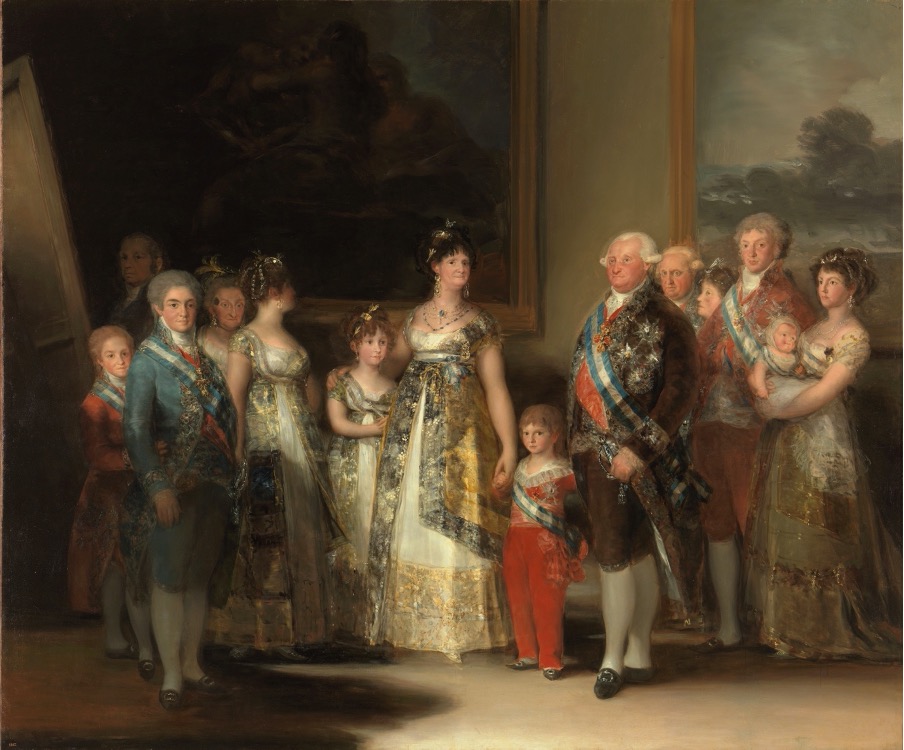
fig.1 Goya, Francisco. The Family of Carlos IV. 1800, oil on canvas. 280 x 336 cm. Museo del Prado, Madrid.

fig.2 Velázquez, Diego. Las Meninas. 1658, oil on canvas. 320.5 x 281.5 cm. Museo del Prado, Madrid.
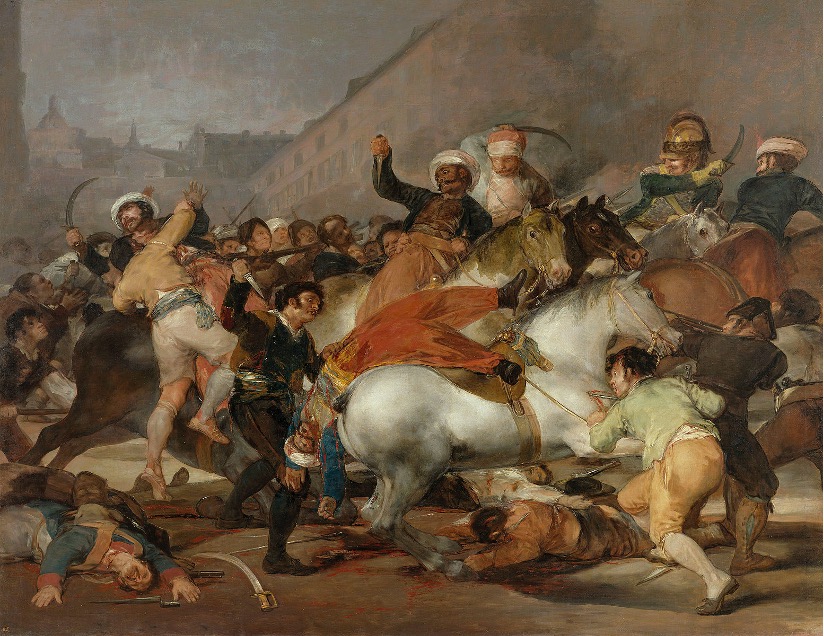
fig.3 Goya, Francisco. The Second of May. 1814, oil on canvas. 266 cm × 345 cm. Museo del Prado, Madrid.

fig.4 Goya, Francisco. They Don’t Like To. 15 × 20.8 cm, sheet 25.2 × 34.2 cm. Etching, Drypoint. The Metropolitan Museum of Art, New York.
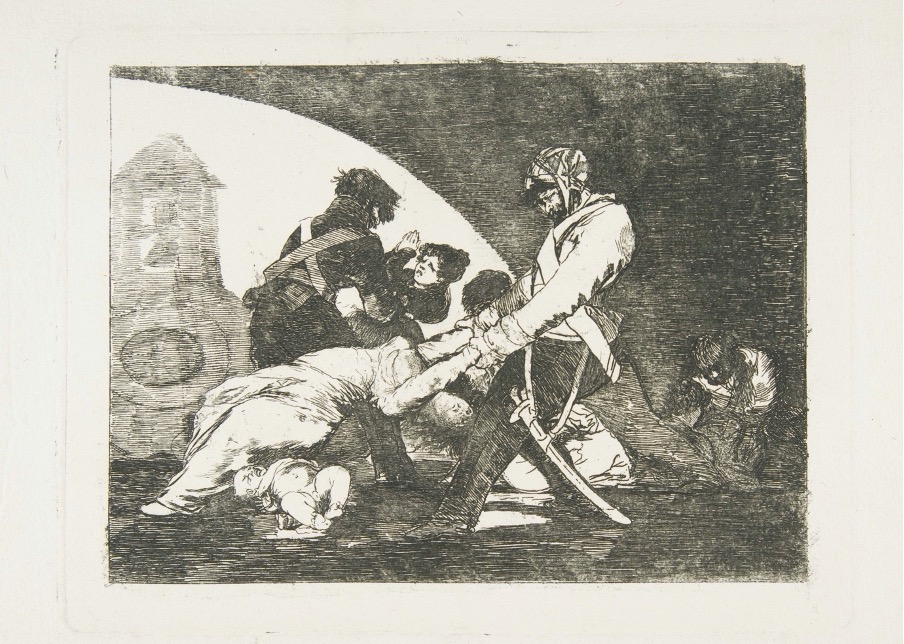
fig.5 Goya, Francisco. Neither do These, 1814, Etching, Drypoint. The Metropolitan Museum of Art, New York.

fig.6 Dix, Otto. Soldier and Nun. 1924, etching, aquatint, drypoint on paper. 19.5 x 13.5 cm. Art Institute Chicago.
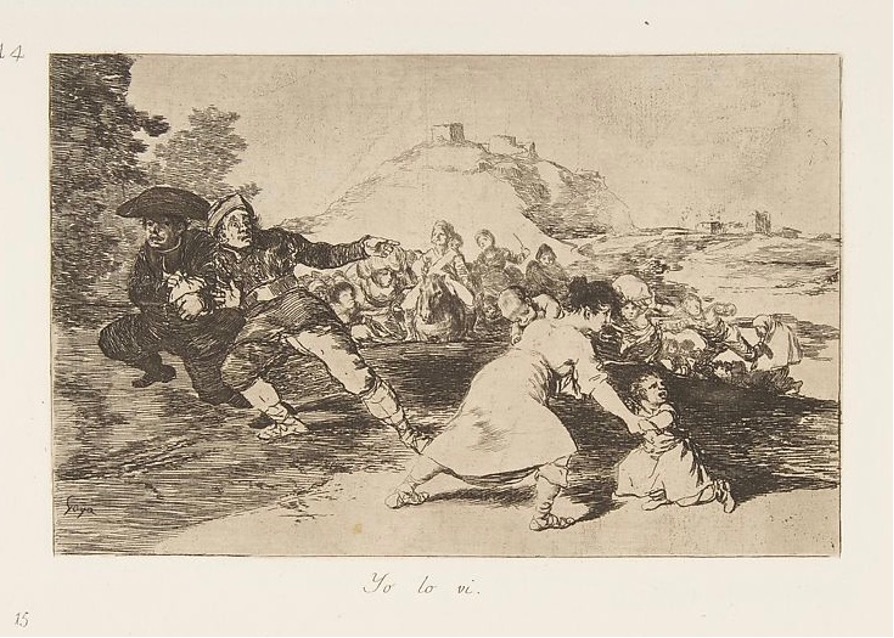
fig.7 Goya, Francisco. I saw it. 1810, Etching, Drypoint, 15.3 x 20.8 cm. The Metropolitan Museum of Art, New York.

fig.8 Goya, Francisco. Que Valor!. c1815, Etching, Drypoint, 5.3 x 20.8 cm. The Metropolitan Museum of Art, New York.
~
Works Cited
Bouvier, Paul. “‘Yo Lo Vi’. Goya Witnessing the Disasters of War: an Appeal to the
Sentiment of Humanity.” International Review of the Red Cross, vol. 93, no. 884, 2011, pp. 1107–1133.
Chute, Hillary L. Disaster Drawn: Visual Witness, Comics, and Documentary Form. United
Kingdom, Harvard University Press, 2016. p. 58.
Crockett, Dennis. German Post-Expressionism: The Art of the Great Disorder 1918–1924.
New York, Penn State University Press, 1999. p. 185.
Gilbert, Adrian. “Dos de Mayo Uprising | Summary.” Encyclopedia Britannica,
Encyclopædia Britannica, 25 Apr. 2020, http://www.britannica.com/event/Dos-de-Mayo-Uprising.
Goldfarb, Hilliard, and Reva Wolf. Fatal Consequences: Callot, Goya, and the Horrors of
War. 1st Edition, Hood Museum of Art, 1992. p. 37 – 38.
Gallery, Park West. “A Closer Look at Francisco Goya’s ‘Disasters of War.’” Park West
Gallery, 9 Jan. 2019, http://www.parkwestgallery.com/francisco-goya-disasters-of-war.
Harris-Frankfort, Enriqueta. “Francisco Goya | Biography & Facts.” Encyclopedia
Britannica, http://www.britannica.com/biography/Francisco-Goya. Accessed 18 Nov. 2020.
Hughes, Robert. Goya. Vintage Random House, London. 2006. p. 272.
Kozak, Kaja. “The Secrets Behind Goya’s Portraits.” Culture Trip, 14 Oct. 2015,
theculturetrip.com/europe/united-kingdom/articles/the-secrets-behind-goyas-portraits.
Matilla, J. M. “Neither Do These – The Collection.” Museo Del Prado,
http://www.museodelprado.es/en/the-collection/art-work/neither-do-these/3ec3b961-d2e7-4c6d-a82e-d4caef17cea1. Accessed 20 Nov. 2020.
Schjeldahl, Peter. “Goya and the Art of Survival.” The New Yorker, 12 Sept. 2020,
http://www.newyorker.com/magazine/2020/09/21/goya-and-the-art-of-survival.
Sooke, Alastair. “Goya’s Disasters of War: The Truth about War Laid Bare.” BBC Culture,
17 July 2014, http://www.bbc.com/culture/article/20140717-the-greatest-war-art-ever.
Shubert, Adrian. “Women Warriors and National Heroes: Agustina De Aragón and Her
Indian Sisters.” Journal of World History, vol. 23, no. 2, 2012, pp. 279–313. JSTOR, http://www.jstor.org/stable/23320150. Accessed 14 Jan. 2021.
Tomlinson, Janis. Goya: A Portrait of the Artist. United States of America, Princeton
University Press, 2020. p. 24.
Tomlinson, Janis A. Graphic Evolutions: the Print Series of Francisco Goya. Columbia
University Press, 1989. p. 25.
Tate. “Five Things to Know: Otto Dix – List.” Tate, 2018,
tate.org.uk/art/lists/five-things-know-otto-dix
Wilson-Bareau, Juliet, et al. Goya’s Prints : the Tomás Harris Collection in the British
Museum. 1981. p. 9.
Wilkie, David. “The Maid of Saragossa”. United Kingdom, F. G. Moon, 1836. p. 14.
~

 Dottie-may Aston